Scott Spencer is a keen follower of micropubs all over the country, and has worked hard to build a large, dedicated following for his page, ‘Micropub Adventures’. At the beginning of June, he visited Burton for the Ale Trail, organised by Ian Webster, during which he put together an excellent report on the town’s pubs and beer heritage. We are delighted to publish this below!
Burton-upon-Trent is one of the most important brewing towns in the world.
Beer has been brewed here for centuries, but the town really came to prominence during the eighteenth and nineteenth centuries thanks to its mineral-rich water, which proved perfect for producing ales.
Famous names such as Bass, Allsopp, Worthington and Marston helped turn Burton into a global brewing powerhouse, with its beers exported across the world.
Today, Burton’s brewing heritage remains at the heart of the town, with historic brewery buildings, traditional pubs and independent brewers keeping that story alive.
On Saturday 6 June, I headed over for the yearly ‘Burton Ale Trail’. Meeting up with Niall ‘From Sheffield With Pubs’ and Jenny and Kenny from Real Ale Finder App, we started at the Stapenhill Institute Club, which has been at the heart of the local community for well over a century.
The Institute was originally formed in 1884 and began life in temporary premises on nearby Ferry Street before moving into its impressive purpose-built red-brick home on Main Street in 1888, where it remains today.
Over the years, the club has provided a place for local people to meet, socialise and take part in community activities. Today, it remains a well-known and welcoming institution – not least because of its comfortable atmosphere, bright, open layout and characterful patterned carpets and framed local artwork – continuing a tradition that stretches back more than 140 years.
Then to The Elms, which began life in the late nineteenth century as a private house before becoming one of Burton’s original ‘parlour pubs’ – a style of pub created by converting large houses into smaller, more comfortable drinking establishments.
Situated on Stapenhill Road, it has served the local community for generations and retains much of its historic character. One of its most distinctive features is the faded “BEST BASS ELMS INN” lettering high on the front of the building, a reminder of its long association with Burton’s famous brewing industry and its ownership by Bass until 1992. Today, it remains a well-loved traditional pub with deep local roots.
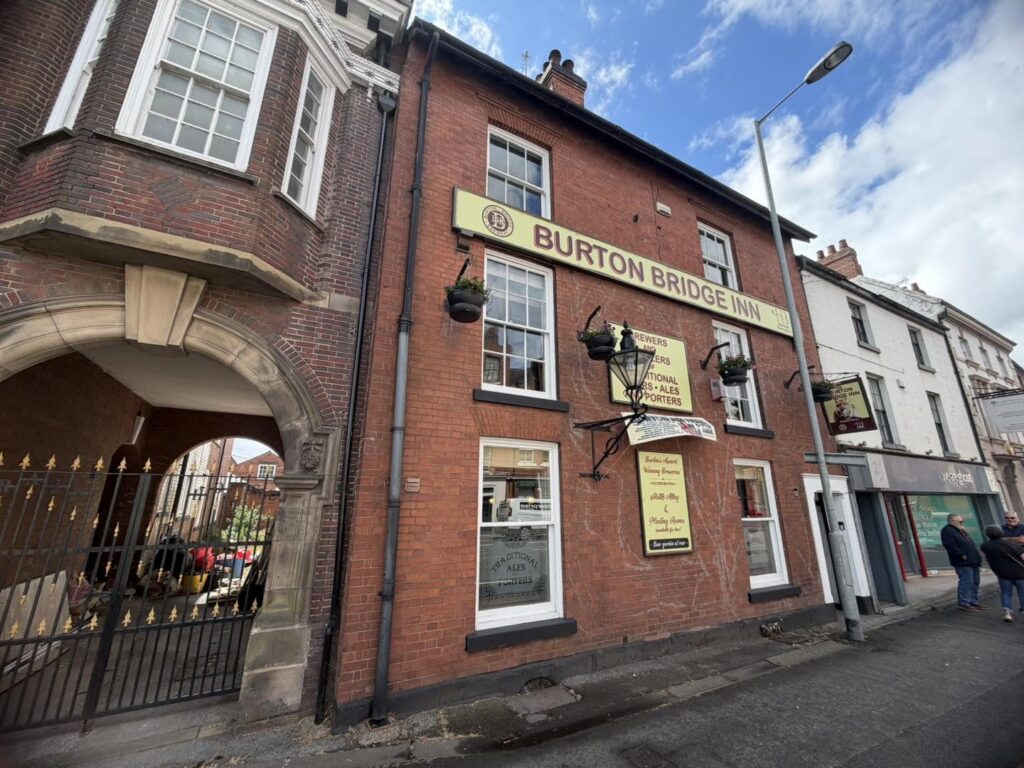
Over the river and into Burton Bridge Inn / Burton Bridge Brewery.
The Inn occupies a building that dates back to the seventeenth century. Originally known as the Fox & Goose Inn, it was purchased by Bass in the early nineteenth century and remained part of the famous Burton brewery estate for many years.
Following its closure around 1980, the pub stood empty for roughly two years before being purchased by Geoff Mumford and Bruce Wilkinson, founders of Burton Bridge Brewery – preserving an important piece of Burton’s brewing and pub heritage for future generations.
Inside, the Bridge has the feel of a traditional pub that has evolved over centuries while keeping its historic character intact, with a layout that encourages both conversation and relaxed drinking.
A short walk brought me to Beeropolis, which occupies a building whose origins date back to the early eighteenth century.
Inside has a warm and welcoming feel, with deep blue walls, wooden seating and plenty of reminders of Burton’s brewing heritage throughout the room. Framed photographs, historic prints and brewery memorabilia add plenty of character, while large front windows create a pleasant spot to sit and watch the town go by.
Then down the High Street to The Cons Club, whose building was originally constructed as the town’s main post office in 1874–77.
When postal services moved to New Street in 1905, the building was converted into a gentlemen’s club, with extensive refurbishment including oak panelling and purpose-built social rooms. The Burton Constitutional Club was established in 1911 and has remained in the building ever since.
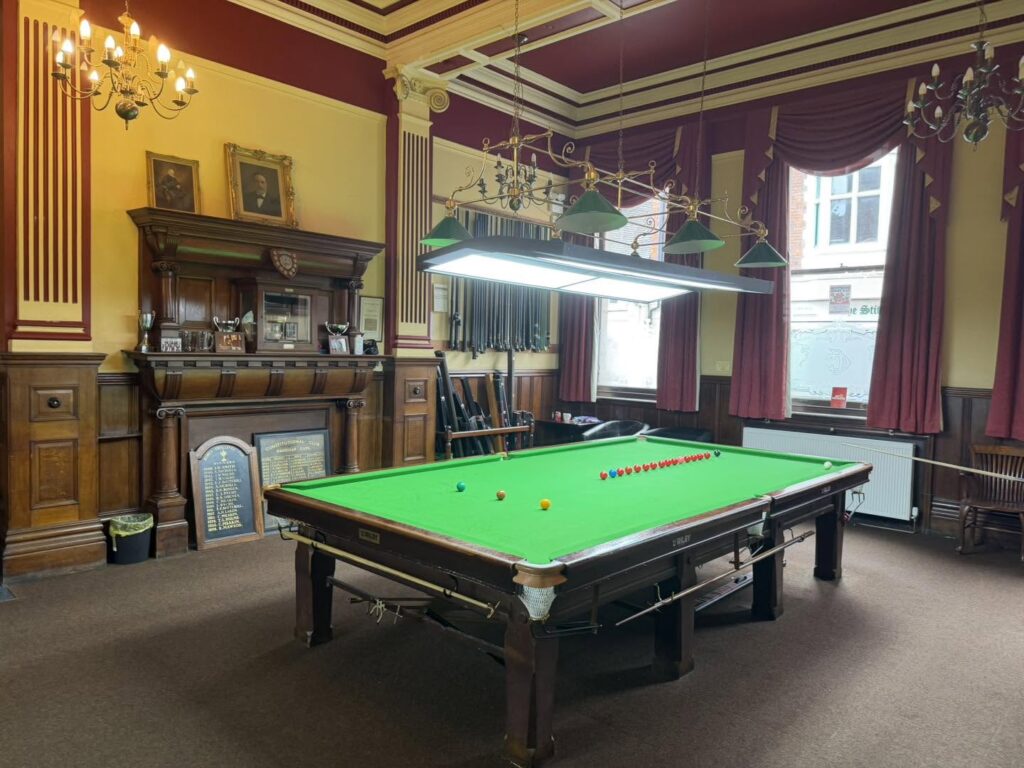
Inside is full of Victorian grandeur, with soaring ceilings, ornate plasterwork, stained glass and rich dark wood panelling. The main rooms are centred around magnificent snooker tables beneath traditional hanging lights, while comfortable seating areas provide space for a quiet drink and conversation.
Despite its scale, the club feels welcoming and well used.
Just up the road was The Dog, one of Burton’s best-known traditional pubs. Originally part of the Marquis of Anglesey’s estate, it was sold into private ownership in 1867 before being leased to Worthington’s in 1873 and purchased outright two years later. Following the 1927 merger between Worthington’s and Bass, the pub became part of Burton’s brewing empire.
After changing ownership several times, the pub was acquired and extensively refurbished by Black Country Ales, reopening in 2015 and beginning a new chapter in its long history.
Another short walk brought me to Inn-Uendo’s, which opened on Station Street in 2024, bringing a new micropub to a town already rich in brewing and pub heritage.
The venture was created by Richard “Dicky” Peace, a well-known figure in Burton’s licensed trade. Drawing on many years of experience behind the bar, he set out to create a friendly and welcoming venue centred on good conversation and a relaxed atmosphere.
The bar has quickly established itself as a popular addition to Burton’s independent pub scene, helped by Richard’s strong local reputation and loyal following.
Just over the road brought me to Bernie’s.
Bernie’s opened on Station Street in 2026, bringing new life to part of Burton’s former Museum and Art Gallery building. Built in 1915 on the site of an earlier police station, the building has played an important role in the town’s history for over a century.
Today, Bernie’s combines Burton’s brewing heritage with a fresh independent approach through its partnership with Cornwall’s Bluntrock Brewery, giving this historic building a new purpose while retaining its connection to the local community.
Inside has a bright, lively atmosphere that immediately catches the eye. Even when busy, it remains relaxed and welcoming, with a friendly energy that encourages people to settle in and enjoy their visit.
Onto the Devonshire Arms, which began life in around 1830 as a private house before being converted into a pub during the 1850s. Following many twists and turns, the pub was sold to its current owners in February 2019.
Inside has a warm, busy feel, full of character and reminders of Burton’s brewing past. Exposed brickwork and wood panelling add plenty of warmth, while the split-level layout gives the pub a distinctive look beyond the bar. It feels historic, friendly and well used, with plenty to catch the eye inside and out.

The Coopers Tavern – one of Burton’s most historic pubs – was my next visit. The building is believed to have been constructed as a house for Bass’s Brewer-in-Charge before later being used as a malt store and, from 1826, a store for Bass Imperial Stout. Brewers would gather there to sample the beer, and over time it developed into the Bass brewery tap, receiving a full public house licence in 1858.
Today, it is part of Joule’s Brewery. Every room is packed with character and history, making the pub feel like a living museum to Burton’s brewing past.
Then on to The Last Heretic, which takes its name from Edward Wightman – the last person in England to be executed for heresy, being burned at the stake in nearby Lichfield in 1612.
The micropub opened on Station Street in May 2016, and has a warm and welcoming feel, combining dark painted walls, timber flooring and soft industrial-style lighting to create a comfortable place to settle in with a pint.
Heading back in the direction of the Railway Station brought me onto the Roebuck Inn, another of Burton’s long-established pubs, with origins believed to date back to the early nineteenth century.
It served generations of local residents and workers as Burton’s brewing industry grew around it, and is now an independent pub, continuing its long role in the town’s social life.
Another short stroll brought me onto Outwoods Brewing, which opened in July 2024 within a pair of restored railway arches in Station Street Yard.
The brewery was founded by Colin Trowell, who began brewing at home in 2020 before developing the project into a commercial brewery and taproom. The location is particularly significant, standing on part of the former Allsopp’s Brewery site, once one of Burton’s most famous brewing names.
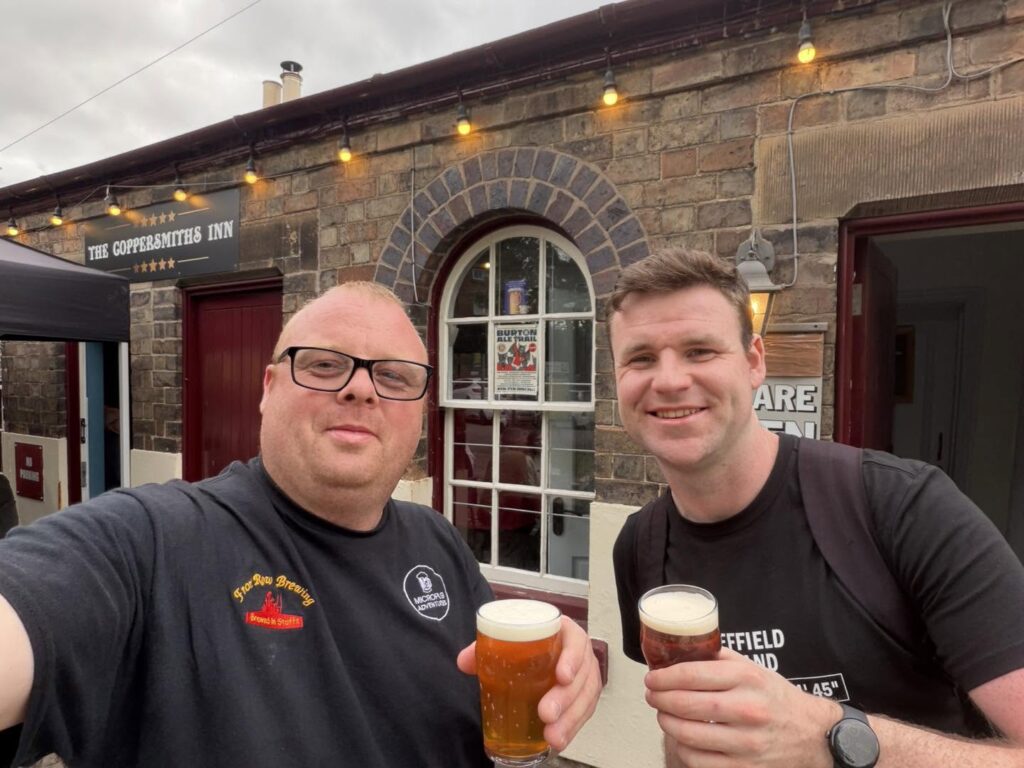
Over the other side of the railway is The Coppersmiths Inn, situated in a small building in Grain Warehouse Yard that was originally built as a coal yard office.
Inside has a warm and welcoming feel, with the main bar acting as the social heart of the pub. Dark textured walls, exposed brickwork and industrial-style lighting give the room plenty of character, while the mix of teal paintwork, wooden shelving and brewery-themed artwork adds colour and interest throughout.
My next visit was to The Alfred, built during the 1860s.
This distinctive double-fronted terrace pub became the brewery tap for Truman’s Burton brewery, serving workers and local residents throughout the brewery’s years in the town. The connection lasted until Truman’s Burton brewery closed in 1971, following which the pub passed through several owners before being purchased by Burton Bridge Brewery in 1996. Its long association with two well-known brewing names makes The Alfred an important part of Burton’s rich brewing heritage and pub history.
I took a short ride out on the Villager bus to nearby Stretton to visit the Junction Micro Pub in Stretton, taken over by Karen and Fraser in 2024, who have put together a fantastic beer selection from nearby microbreweries.
When they first opened, the response from the community was incredible. They thought only a few people would show up on opening night, but over 100 came through the doors!
I next headed out to The Waterloo Inn, which has been a familiar part of Winshill for many years and remains one of the area’s best-known traditional pubs.
During Burton’s brewing era, the route through Winshill was an important link between the town and South Derbyshire, and local tradition holds that brewery dray horses once stopped near the pub on their journeys. Today, the Waterloo continues to combine its traditional character with a strong community focus.
My final call was to the Burton Tennis and Squash Club. The club can trace its roots back to around 1912. In 1921 it moved to its current Ashby Road site, and has since been recognised as an important sporting and social venue within the local community.
Inside has the feel of a welcoming members’ club, where sport and socialising go hand in hand. The main lounge is bright and comfortable. A colourful patterned carpet adds character, while a mix of tables, chairs and upholstered seating provides plenty of places to relax with a drink.
It was great to spend the day chatting about pubs, history and all things beer-related.
The trail really showcases why Burton remains such an important town in Britain’s brewing history. With good company, interesting pubs and plenty of conversation along the way, it proved to be a thoroughly enjoyable day out.
Follow Micropub Adventures on Facebook here, and on Instagram here.